Warning: If you or someone close to you is thinking about suicide, you can contact the following helplines:
• Iran: Social Emergency (123), Urban Emergency (115), Consultant’s Voice (1480), Tehran Psychiatric Emergency (44508200)
• Afghanistan: 119
• Türkiye:Lifeline Turkey (212-405-65-55) or Emergency (112)
• United Kingdom (England):Samaritans Charity (116123)
• Germany:Telefonseelsorge (112 or 08001110111)
• Canada:Talk Suicide Canada (1-833-456-4566) or 911
• Australia:Lifeline Australia (13 11 14)
• United States: 911 or Suicide & Crisis Lifeline (988)
Shahin M
Shahin, in his early twenties, had completed his mandatory military service a couple of years ago.
He served for two years and then tried to study for a year.
Like many young people in Iran, Shahin was working hard to reach his goals, meet his family’s expectations, and become independent.
“Whatever I did, I felt like I was falling behind. I wasn’t getting anywhere. I wanted to end my life.”
Shahin’s family is from the city of Khoy in the West Azerbaijan province of Iran. They lived a normal, quiet life. His family was never fans of the regime, but they had never actively acted against it either.
When protests broke out in 2017, Shahin started to become aware of irregularities. He began to notice that the normal life he had been living reeked of oppression.
“My whole outlook changed.”
Shahin realized that as he struggled to reach his goals, pursue his dreams, and become independent, the government was working against him. From that realization, there was no turning back.
When protests started in late September of 2022, Shahin decided it was time to take his dissatisfaction with the government to the streets.
“I told myself, ‘I’ll join them in the streets. If I’m killed out there, then so be it—at least I won’t die in vain.’”
On November 19, Shahin’s family had gone to their village and weren’t at home. Shahin told his brother he was going to the pharmacy to pick something up, so he wouldn’t be stopped, and then he headed to the streets.
Shahin joined a crowd that was chanting when the police surrounded them and attacked. First, he was caught in a cloud of tear gas.
“It burned everywhere—my eyes, my throat.”
Then, shotgun pellets hit him. Shahin started to run to escape the police, but he was still struggling to breathe from the tear gas. He ran as far as he could before collapsing.
Two people at the protests came to Shahin’s aid and got him into their car. At first, Shahin was disoriented and thought it was the police who had caught him, but he realized they were helping him as they drove him away from the chaos.
They helped him and called his family to let them know he had been injured.
His family took him to the hospital, where many others who were badly injured were being denied entry. Anyone who entered did so at the risk of being arrested.
Shahin’s family decided to take him to a private clinic, where a doctor managed to remove some of the 10 to 20 pellets from his face. But there was nothing they could do for his eye. They were told to urgently go to Tabriz for treatment.
That same night, Shahin and his family headed to Tabriz.
The first doctor who examined Shahin insisted the eye would need to be enucleated. Unsatisfied with that answer, Shahin’s mother began looking for a way to transfer him to Tehran for treatment.
A second doctor in Tabriz agreed to operate and try to save the eye. He removed the pellet from Shahin’s eye and managed to maintain its shape, but Shahin can now only see light projected directly into his eye. He can’t make out shapes or colors.
“We never publicized what happened to me. We stayed private about the whole situation and didn’t tell anyone.”
The clinic worked on Shahin quietly, concerned about retaliation from government forces for providing treatment to someone injured at a protest. They maintained discretion.
Shahin hadn’t expected to leave the protest with a lifelong injury, but he had made peace with the fact that he might not return home.
“At that moment, I felt no fear. It didn’t matter to me what might happen. It didn’t matter if I lived or died.”
Shahin’s family did everything they could to help him get treatment, but they were not pleased that he had risked his life. They argued with him about the value of his actions and accused him of putting them in danger.
“My family were never fans of the regime. I would tell my dad that sitting on the couch and watching their crimes broadcast on the news wasn’t going to bring an end to this regime.”
Shahin’s family never thought he was doing something inherently wrong. They were just afraid the system would crush him for choosing to take a stand.
Shahin believes that the incident of him being shot was recorded by government cameras and that he has a right to file a lawsuit for what happened. But he worries for his family’s safety. He fears that if he takes action, the government will retaliate against him and his family.
“The reason I went out into the streets that night is simple—I saw there were people in the streets.”
Shahin had been watching with his family on TV, scrolling through social media, seeing what was happening, and he decided he couldn’t sit by and do nothing.
“It felt like a betrayal to myself and to them.”
And so Shahin went to the streets, and his life changed.
Shahin, whose mind had been filled with suicidal thoughts, no longer had the will to act on them.
“I became indifferent. I had spent all this time chasing my goals and getting nowhere—and that was with both eyes. Now, with one eye, there is no way I’m going to be able to get anywhere.”
Living in a small town, it’s hard to keep people from gossiping, and many pass judgment on Shahin for going to protests and getting injured. People say he brought trouble to his family.
This causes a rift in Shahin’s support system, with his family also struggling to understand what convinced him to go to the streets that night. But they had known that if protests broke out, Shahin would be on the front lines.
For Shahin, it was worth it. He never wanted anything extraordinary out of life. He wanted to keep up with his friends, have things of his own, his own home, and live comfortably.
He wanted a stable, independent life where he could stand on his own two feet.
“What does it mean to be human if people have become so numb to everything?”
Shahin wants people to be angry. To demand their rights. He knows it’s hard to ask people to risk their livelihoods to protest.
“I don’t hold unrealistic expectations of people. I know how hard it is to step forward. But deep down, I always wished that when the time came—when it truly mattered—people would rise up. I hoped they would come together, no matter what the consequences.
But instead, many just stay home. They watch from behind their windows. They sit in front of their televisions, scrolling through the news, waiting to see what will happen.
It’s like they’re waiting for someone else to bring change—waiting for the law to change itself or for a revolution to magically happen on their screen.”
Shahin feels no regret for his decision that night. He says if he had been injured doing something frivolous, he would be furious and have a much harder time coming to terms with it. But he knows that what he did was right.
“When change is needed, it happens in the streets—where the people are, where their voices rise together.
But revolutions are costly. People think change comes easily, but it never does.
A revolution demands sacrifice—blood, pain, and loss. It’s never handed to you. You fight for it. You pay for it. With everything you have.”
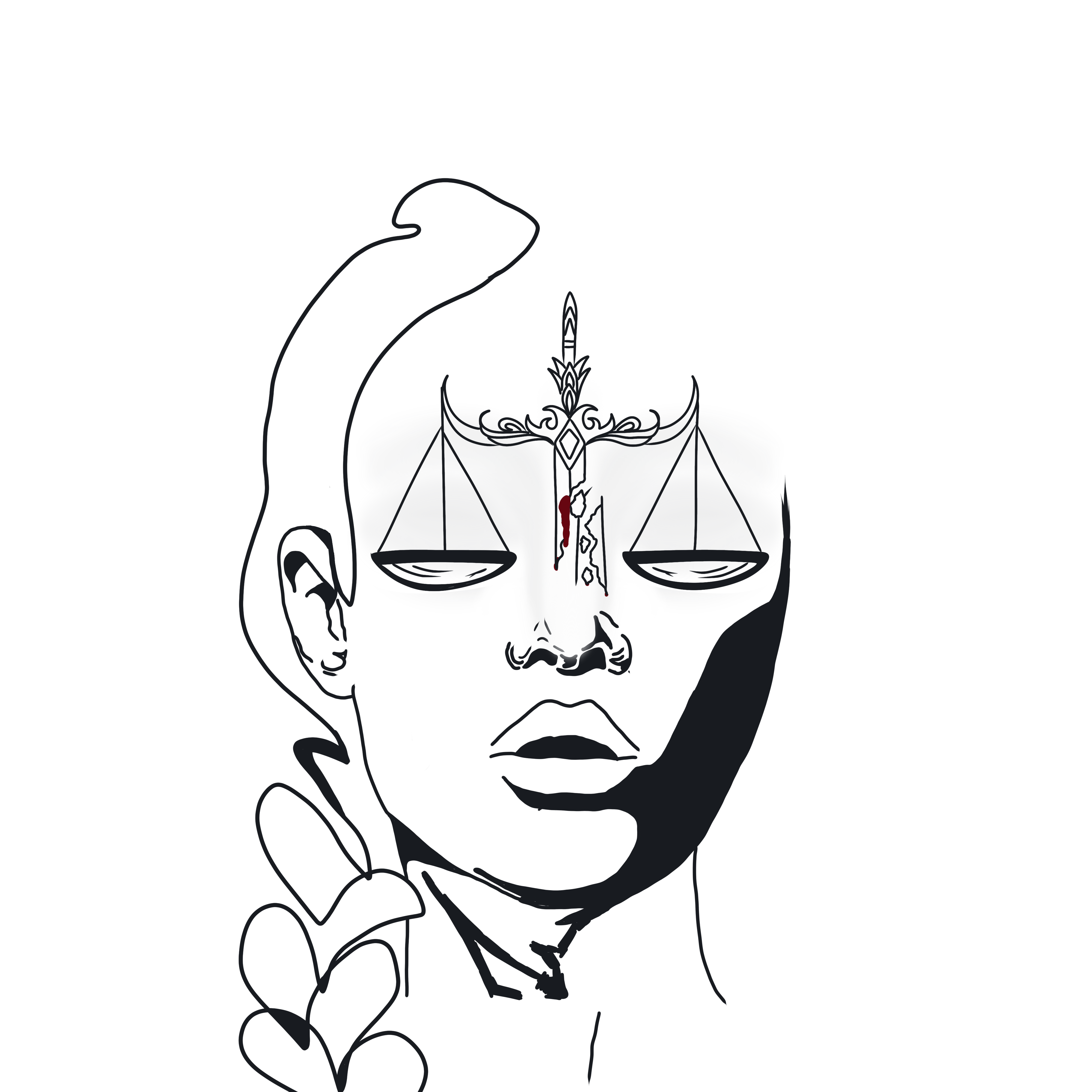
 Eyes for Freedom | Cheshm Baraye Azadi | چشم برای آزادی