The eyes of a revolution and the stories behind them
Our Stories
We have asked for people to share with us their stories, the way that they would like for them to be told.
Mohammad Farzi



Mohammad Farzi
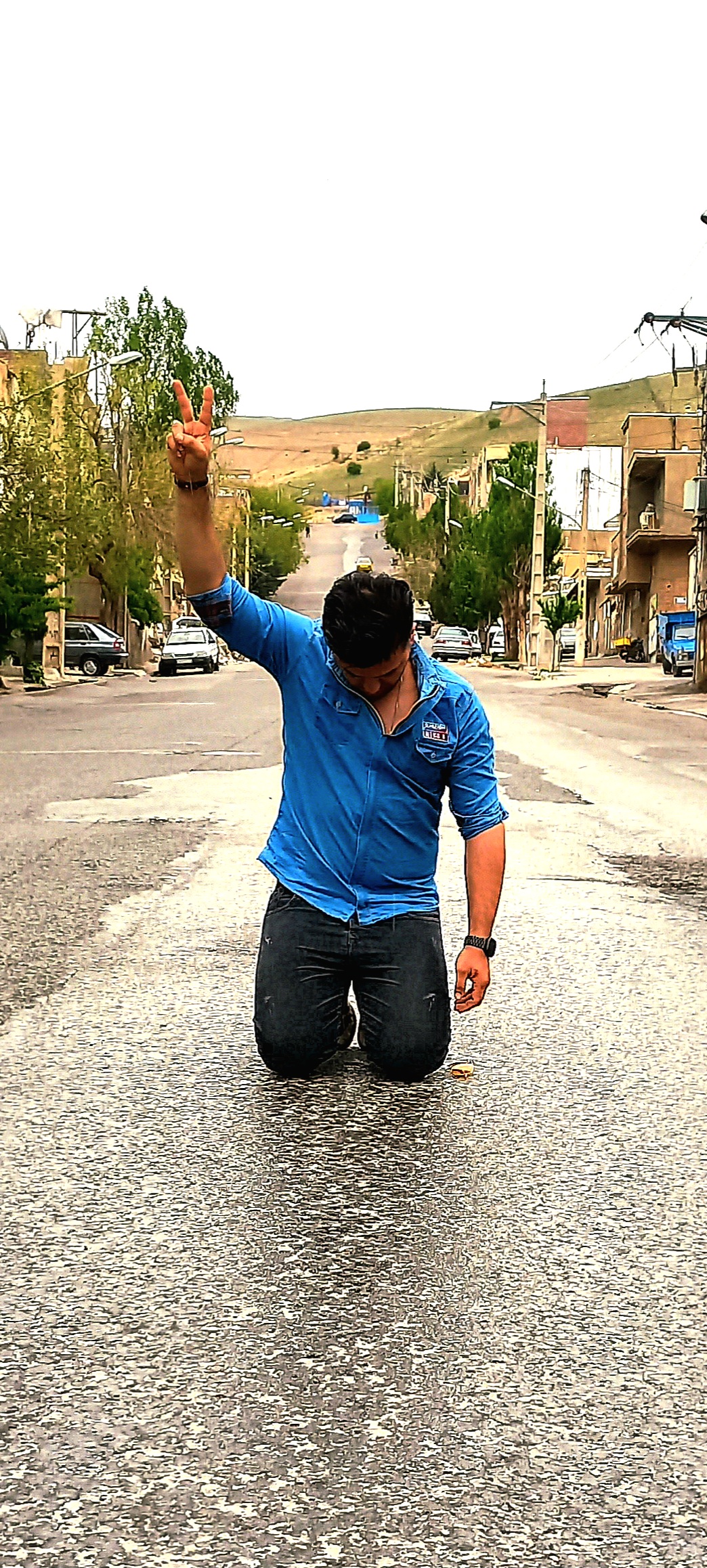
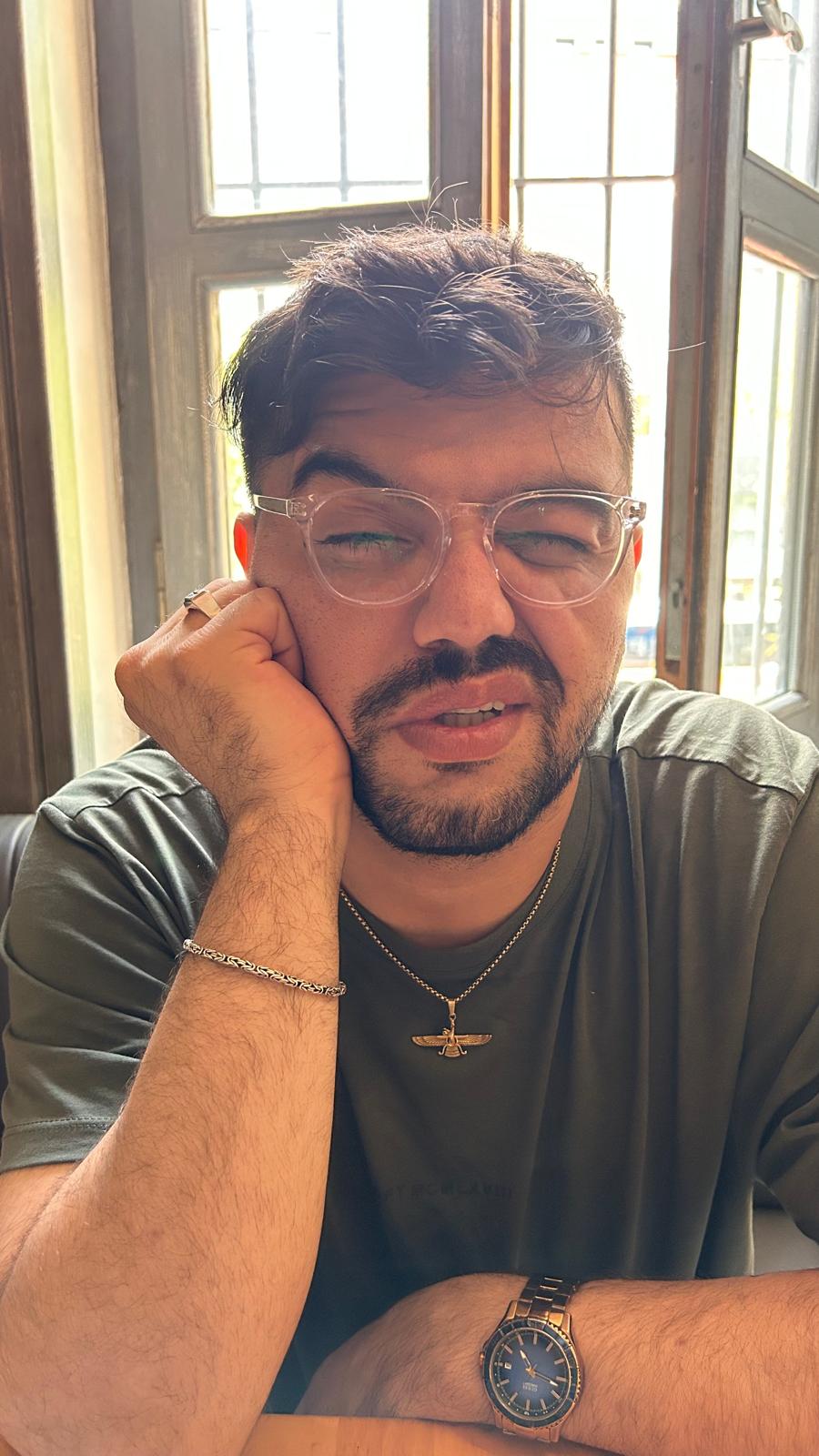
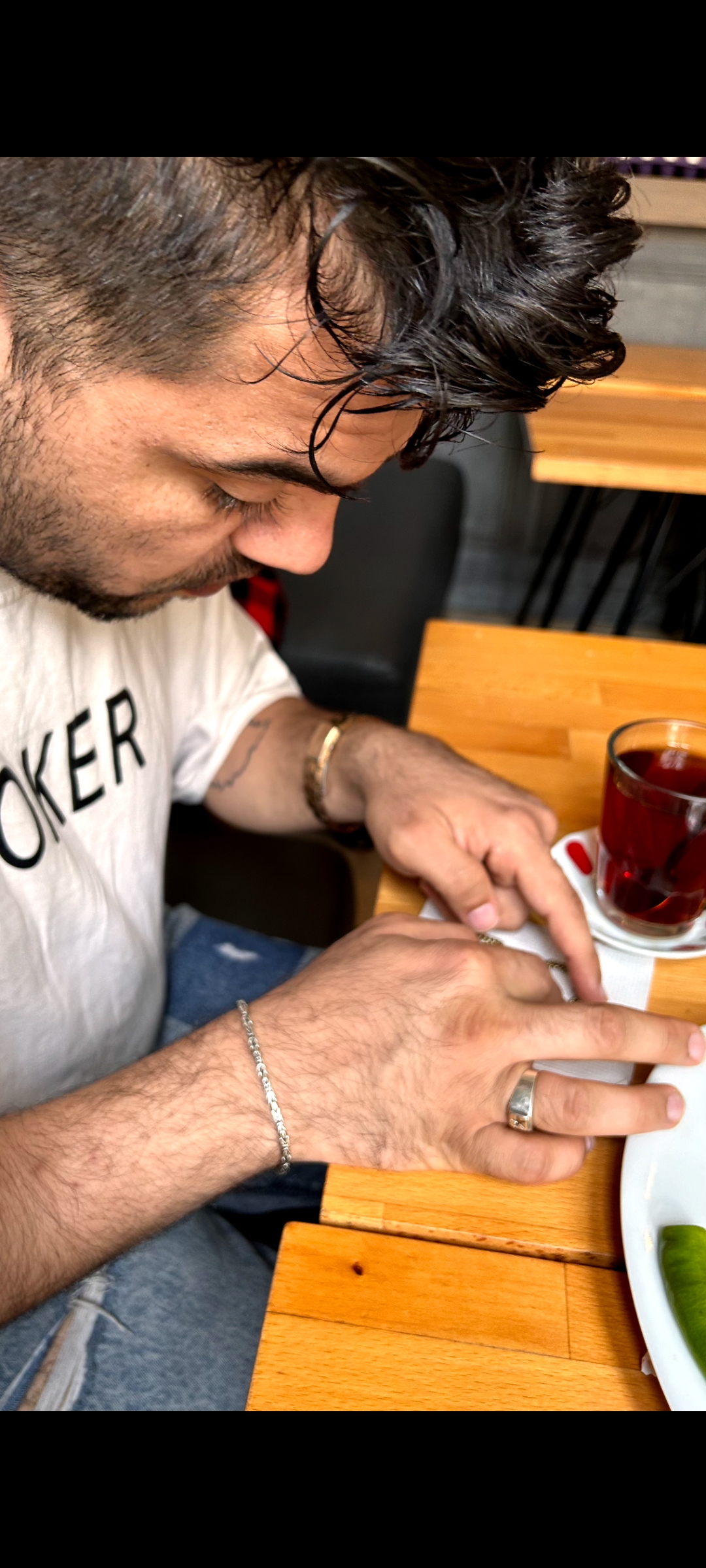
31 years old. A martial artist, dancer, street performer, actor, music studio director… an artist. Mohammad liked to keep busy.
“I would leave the house at 6 in the morning and would get home maybe at midnight”.
He didn’t like to stand still, and he had a lot of talent to share with the world.
Mohammad was raised in a religious family, but growing up in the south of Tehran, Mohammad saw how people were exploited, how vulnerable they are, how much hurt they were carrying. This lead him to losing his faith, as is the case with many who grow up in Iran.
Mohammad had lived many lives, had gone from profession to profession chasing his passions where he could, he left martial arts because he felt that his skills were being exploited for reasons that he did not want to be involved in, he moved from there to the world of the arts. Mohammad had a skill for dance and trained in traditional dances, folklore and hip hop and break dancing. A well rounded performer. He also started to get involved in music and acting. He would act in theatre shows and he had opened multiple studios.
“I found freedom in art.”
Mohammad also did character work and street theatre. His best known as “the Joker of Tehran”, his Instagram handle. The Joker of Tehran was a COVID creation.
“I noticed that the people on the street weren’t smiling anymore, they weren’t happy. The air felt different around them. So I created the Joker to bring smiles back to their faces.”
Mohammad and a group of his friends that did character work would do street shows for free just to see smiles come back to the streets of Tehran. He had chosen the character of the Joker, because from his perspective, the Joker was trying to fight for better conditions for the people, and Batman was reinforcing police brutality and oppressing the poor. This is the parallel that Mohammad had drawn based on the world that he had gown up in and known.
“But it wasn’t really the same. Even if they would smile for a moment, it wasn’t a deep smile”.
Mohammad was noticing a deeper pain that the people were carrying with them everyday.
Mohammad witnessed as this pain seemed to grow over the next few years leading up to the murder of Mahsa “Jina” Amini. He saw as the unrest deepened as people were under pressure economically, the price of cars and houses were so high that young people like Mohammad think about getting married as they wouldn’t be able to support a family, they were under pressure environmentally, with continued mismanagement and pollution, as well as the threat of extinction of the native animals, the lack of medications and appropriate health care, the mismanagement of resources leading rolling water and electricity cut outs … the list of reasons can go on and on as to why the people were on the brink. And then the murder of Mahsa “Jina” Amini happened and it all boiled over.
“Why do we need to wait for something to happen to someone we love?”
Mohammad tells us that he went out a couple of nights before, but didn’t find any places where people were gathering, and then on the night of 22 September 2022, he and a couple of his friends went and bought some masks and went further forward, closer to the front lines. This time they found the crowd protesting peacefully.
When the police came, they immediately starting firing tear gas canisters into the crowd. People panicked and started to flee.
“I turned around and noticed that my friends weren’t with me anymore.”
Worried that his friends were in trouble, Mohammad turns around and goes back to where the crowd had been. There, he’s confronted with a policeman dragging a girl away by her hair.
“I couldn’t stand by and do nothing. Even if in another context I had seen the same thing, where someone was being dragged in that way, regardless of their gender, I would have intervened.”
Mohammad manages to help the girl escape but in doing so, himself ended up isolated. That’s where Mohammad, while disoriented from the tear gas, looks up, sees the flash of a green laser, and then is shot.
“It felt like a bug had gone into my eye. I couldn’t believe that I had been shot, I couldn’t believe he would actually pull the trigger.”
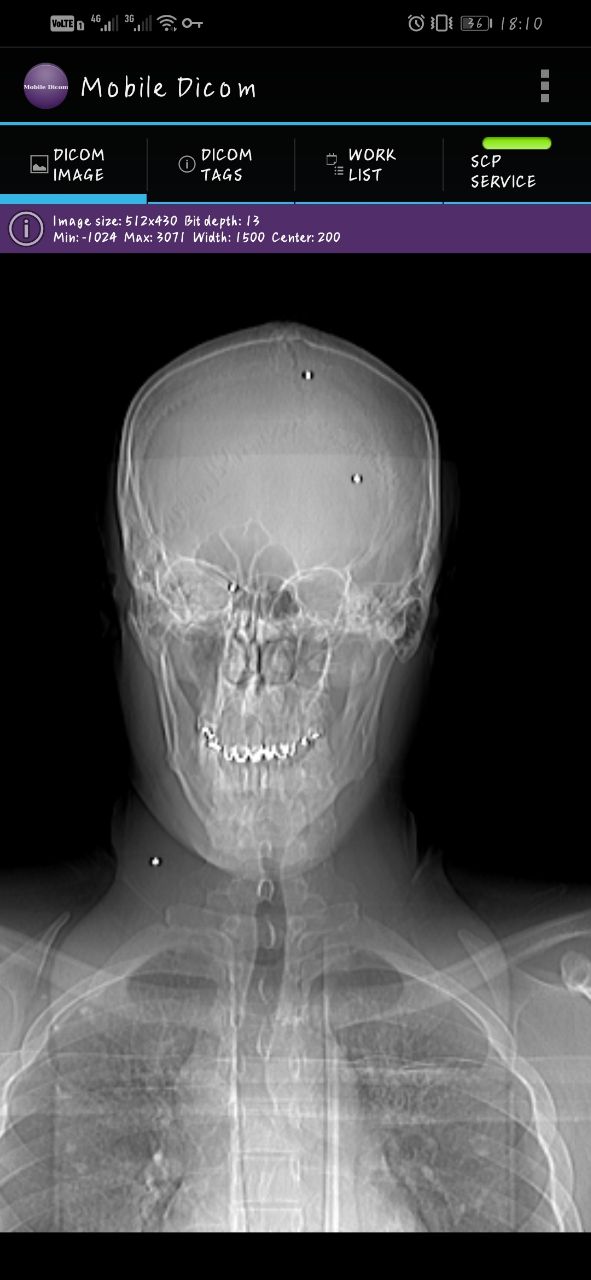
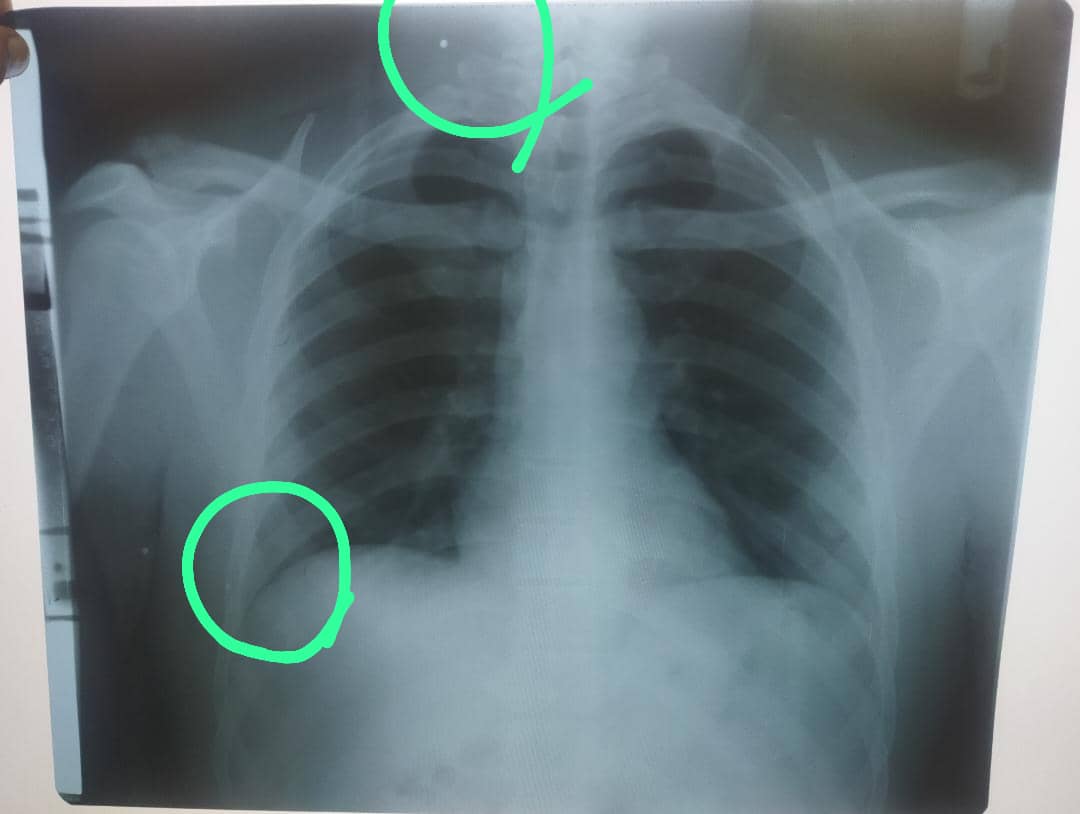
Mohammad had been hit by six pellets, one at the top of his head, one in his forehead, one in his neck, just missing his vital blood vessels, one in his arm and another in his chest. The sixth pellet was the “bug” that had flown into his right eye.
“I wasn’t there to fight just for my rights, but I was also fighting for the rights of the person who shot me. I was fighting for a better life for all of us. I don’t know how the man that shot me didn’t understand that.”
Mohammad realising that he had been marked by the blood he was shedding ran back toward where there were more people gathered. Seeing that he had been injured, the people immediately took action to help him.
“I kept holding my left eye to see what I can see, I could see some bits from the corner of my eye, but something was very wrong.”
The protesters around Mohammad helped him by giving him a mask, a sweatshirt and a hat so that he wouldn’t be so visible as he was covered in blood. In the chaos, Mohammad was asking everyone what had happened to his eye.
“No one would tell me what was going on with eye, they kept telling me it’s nothing.”
Eventually someone tells Mohammad that it seems like his eye had been punctured.
Mohammad recalls how more than fear in that moment, he felt safe with the people, he saw how everyone was trying to help.
Amongst those people, someone comes to help Mohammad, and he tells him to look him in the eyes. Mohammad recalls that this person calmed him by telling him that he had been shot in both eyes in the November 2019 protests, and he’s now totally fine.
Mohammad later learns that that man was named Mohammad Hossein Erfan. He had reached out to Mohammad on Instagram to send him the video he had taken of Mohammad that night. Mohammad Hossein Erfan had been blinded in one eye, and only had 30 per cent vision left in the other. He was 24 years old when he was injured.
Mohammad Hossein Erfan passed away in February of 2024 at the age of 28 years old after a brief illness.
Mohammad fled the scene in his friend’s car that they had arrived in. His friend had also been injured, he had been shot with a pellet gun from behind.
Mohammad recalls that his friend was losing consciousness behind the wheel.
Once they were safely away from the protests, Mohammad took a Snap toward Farabi Hospital. Mohammad Hossein Erfan had told him that’s where he’d gotten help and that he would be okay.
Mohammad meets with his brother there, but his brother says they can’t go in as there is a guard at the door of the hospital taking the names of anyone that goes it.
Being unsafe, Mohammad and his brother go home.
Every time that Mohammad has recounted his story, the part that upsets him the most is the reaction that his family had had when he had arrived home in the state that he was.
“My mum ran out to the front and fainted.”
Mohammad and his little sister went into the bathroom where she helped him to get cleaned up. His sister washed his clothes to try and get the blood out of them so that their mother wouldn’t have to see.
His sister was just 17 years old at the time.
“She was trying to be brave but I could see that she was shaking.”
Mohammad managed to get some medications that night from the pharmacy to help me to make it to the morning, and in the morning, he went back to the hospital.
“My family were still worried, but I said, “Either I’ll get my eye back, or I’ll end up in prison.” Either way, I have to try to save my eye.”
Mohammad recalls that the hospital was filled with people with injuries similar to his. He recalls seeing a man wheel in a woman on a wheelchair who had both her eyes shredded. Another man had come in with a 17 month old baby in his arms, they were screaming for help. The mother runs in and slips on the bloodied floor, distraught.
“I forgot about myself.”
Mohammad eventually was operated on two times. He wasn’t able to say the truth about what had happened to him because he had been threatened at Sina Hospital where he had been sent for imaging.
In total to date, Mohammad has had six operations on his eye, mostly fighting to save his retina and the shape of his eye. At first Mohammad had been told by a resident that his eye has 20 per cent vision, but in reality, he can barely see shapes, shadows and some colours.
Mohammad was unable to work after his injury. He wasn’t allowed to lift anything that weighed more than five kilos and he wasn’t allowed to physically exert himself. This lead to a very active man, suddenly having to spend a lot more time at home, and resting. This also made it very hard for him to be able to pay for operations needed to save his eye.
“There is a quote I know that says “the bravest thing I’ve ever done is asking for help“.”
Mohammad had started a network of support for people injured like him. Mohammad had reached out to those he could find on Instagram and started sharing their before and after photos on the internet. This was Mohammad’s way of filing a complaint. He wanted to show the world the crime that was committed against them.
“I hope it doesn’t happen to anyone, but my face didn’t look like this”
Mohammad would write on his Instagram.
His activities made him a target, of course. Mohammad was helping as many as he could in any way that he could. He was going to different parts of Iran to stand with victims, he was grieving with the families of protesters that had been killed, and he was helping to get medication and donations to where they were most needed.
Mohammad had done everything that he could to make something beautiful from this very horrid thing that had happened to them. He was part of a unity that gave many people hope and showed the world the resilience of Iranians.
When we asked if Mohammad has made a formal complain he told us that he was treated as if he had been the one to commit a crime, not the person who had shot him.
Mohammad has made peace with his injury in that in everything that he has seen, he is grateful that he still has one eye that can see.
“If Matin Mannani, Hossein Naderbeigi, or Ali Tahoune are able to make peace and keep going despite having both eyes taken from them, why shouldn’t I?”
Mohamamd had expected for people to really come out into the streets and support each other to keep pressing forward until the downfall of the regime.
He had expected that they would be head, that they would reach all of their goals and to be able to live with the freedoms that is the birthright of so many others, but taken by force from the people of Iran.
In spite of all of his pain, Mohammad fought hard for him and the others to be heard. For their voices to reach the world and to show that they, despite their injuries, are standing stronger than ever.
When we asked Mohammad the impact his injury has had on his life, he told us that he’s lost all the excitement for his work. His goals had shifted completely. His work which required so much heart, just didn’t feel right anymore.
Mohammad performed as the Joker a couple of times after his injury, but aside from the intense pain caused by the costume makeup seeping into his eye, he felt like he was pretending like things were normal, that life was back to normal. But the reality is that nothing was normal. Nothing would go back to being normal. So it didn’t feel the same. So many people live their lives pretending that everything is okay and ignoring the massive problems. Everything isn’t okay. The people need to fight to make it okay.
When we asked about Mohammad’s goals, he told us:
“I wanted to keep the traditions of Iran alive. Through music and through dance, I wanted to make sure those traditional arts didn’t die.”
He also wanted to continue to teach martial arts and participate in competitions. Mohammad liked to stay busy, and in many ways all of the work that he did, although they were different they were interconnected. He wanted to be able to continue without being limited by the many things that get in his way, such as censorship, or laws that prevented him from performing freely.
Mohammad’s message to the world:
“It’s hard to give a message to the world when they’ve not walked in our shoes.”
He warns against oppression,
“Stand up at all cost against oppression. Be mindful of your own actions, if fighting for your rights takes away the rights of others, you become part of that same oppressive system. So fight against it. No matter what.”
When we asked Mohammad what his message was to those injured like him, he said:
“They are so big that I wouldn’t know what to say. When you get to know them, at the level of their souls, I’m proud to be on the same path as them.”
“we didn’t want anything but the right to live, just to live. Something that’s been taken away from us”
“Don’t get used to someone coming to save you, someone to come and give orders. Don’t get used to oppression. Try and fight for your rights in every moment. Give yourselves the right to live.”
We asked Mohammad if he has any regrets.
“Regrets? None, I carry it with pride. We did the right thing, it’s them that should be filled with regret.”
– Mohammad Farzi
 Eyes for Freedom | Cheshm Baraye Azadi | چشم برای آزادی