The eyes of a revolution and the stories behind them
Our Stories
We have asked for people to share with us their stories, the way that they would like for them to be told.
Hamid Ghasempour
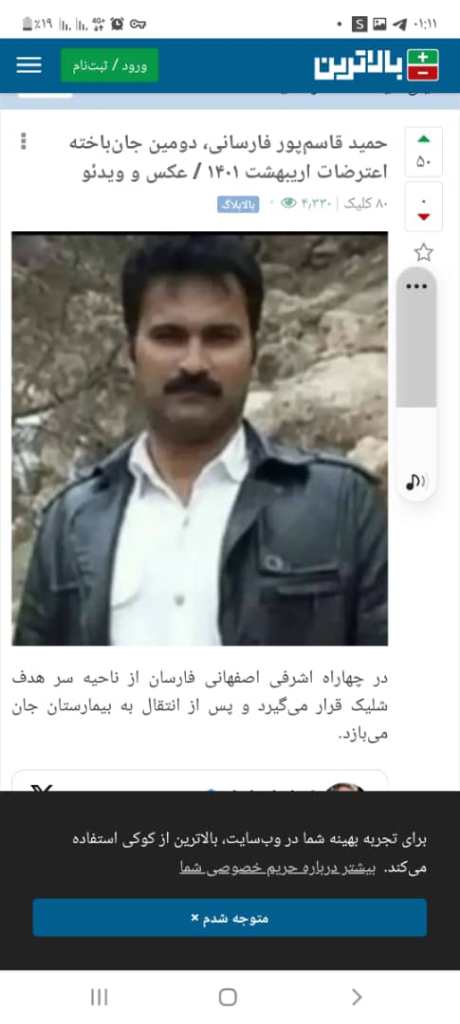

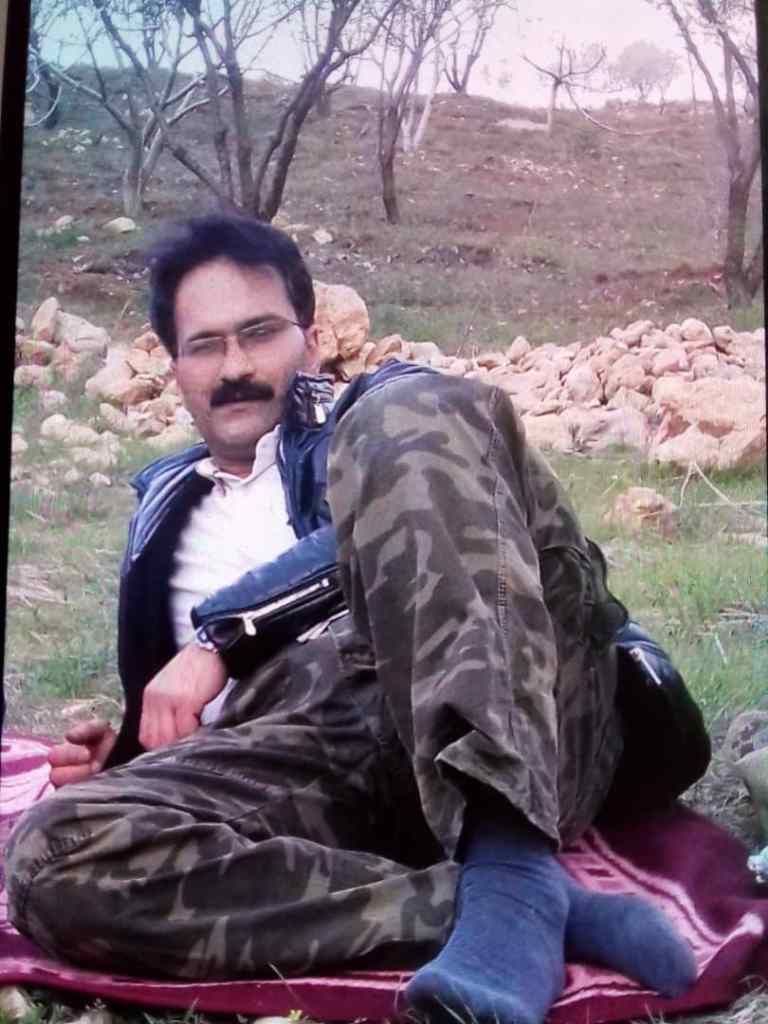
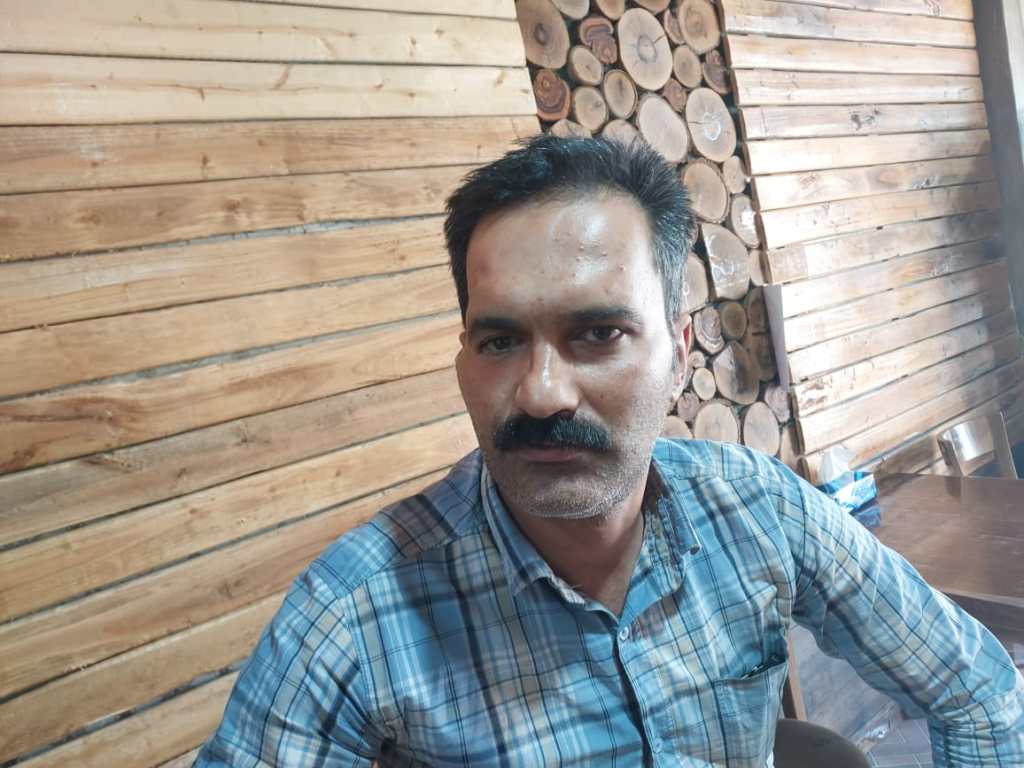
“I am like Arash; I fear no one’s arrow. I may lose my head, but I will never bow down. Until the people of my land achieve peace, my path remains the same.”
– Hamid Ghasempour.
Hamid Ghasempour
A husband, a father, a shopkeeper.
37 years old.
April 2022, protests were sparked by a range of issues, including economic hardships, inflation, rising food prices, and water shortages. In particular, protests in cities like Khuzestan and other provinces were linked to the ongoing water crisis and dissatisfaction with the government’s handling of the economy and environment.
“Protests due to the denial of the most basic civil rights such as freedom, the living conditions of the people, oppression, lack of freedom of expression, and the trampling of the pride of the men and women of my country.”
We asked Hamid what made him go out on that day.
“I went because I’m Iranian”
He said he couldn’t be indifferent. He saw his people suffering, struggling in this impossible economy, the environment that’s dying around them. He saw pain and chose not to be indifferent.
We asked him if he was scared.
“When you’re defending your rights, you don’t feel fear.”
He said he didn’t feel any fear, he wasn’t thinking of himself at the time, his focus was on the people and the problems that they were fighting against.
Hamid tells us that he was shot from behind. Witnesses have told him that the shot came from less than 10 meters away.
“I was at the mercy of the people”
After he was shot, Hamid lost consciousness. The people helped get him to a hospital, but his condition was very severe and the hospital in their town was unable to treat him. He was moved from one hospital to another, with a doctor asking his family why they have brought them a corpse.
Eventually a doctor agreed to treat Hamid, who was in a coma. At the time, it wasn’t clear how he had been injured. CT scans revealed metal pellets in his head, 23 of which remain. Hamid’s right eye was badly injured.
Hamid doesn’t know exactly how many operations he’s had to have, unlike many of the others, because the damage to his skull and brain was so severe, surgeries on his eye were the least of his worries. For months, he was unable to walk independently and needed the help of his wife to get around.
While he was in a coma, someone filed a complaint on Hamid’s behalf. The protest had been peaceful, so why had he been shot? They have filed a complaint to ask for answers as to what Hamid’s crime was that he was shot at by police. In response, he was offered compensation, but Hamid refused to take compensation. His goal wasn’t to take more money from the people. His goal was to hold accountable those who have fired at him. But it has become clear to him that although there were witnesses to the incident, and there were very likely surveillance cameras recording in the area, no one will ever be charged with or held to account. Not the person who fired the weapon and not the person who gave the order to shoot.
With all this, Hamid is very determined to continue his pursuit of justice.
We asked Hamid if he had made peace with the fact that his eye will never be the same again.
Hamid said,
“societal change comes at a price. Why should my countrymen be digging in dumpsters for a bite to eat? I have paid my price to try and create change.”
Hamid was still in recovery when the news of the death-in-custody of Mahsa “Jina” Amini set the country on fire. He was bedridden, his eyes were bandaged and he couldn’t walk independently. But if he could have, he would have been out there in the streets again with the people. He felt the weight of not being able to participate due to his physical condition, but he had no choice.
Hamid’s message for the people of Iran was for them not to accept oppression and stand up for their rights.
All he wanted, all he had asked for was a peaceful life without pain, without constant worrying and stress, the right to a normal life for the people of Iran. A life of freedom, without bloodshed.
“I read my own obituary, parts of my skull were planted in my stomach for repair…”
“…Personally, I want a free life, a life of freedom without bloodshed for the people. I don’t want anything more than that. I have never asked for too much. It is my right to ask for this. My youth is gone, my health is gone, my eyesight is damaged. I saw things I shouldn’t have seen. I saw the pain of my family, the tears of my parents and loved ones. I saw the collapse of my own pride. I witnessed things I shouldn’t have seen. Nothing is left for me anymore; nothing will return to me—neither my health nor my youth. I have sacrificed all of this. I offer it all, as a gift, to the people of Iran, so that they may achieve a life of peace and freedom. And I will stand with strength and pride until the end, until the violated rights of the people of Iran are restored in their homeland.”
 Eyes for Freedom | Cheshm Baraye Azadi | چشم برای آزادی