The eyes of a revolution and the stories behind them
Our Stories
We have asked for people to share with us their stories, the way that they would like for them to be told.
Ali Zarei
Ali Zarei
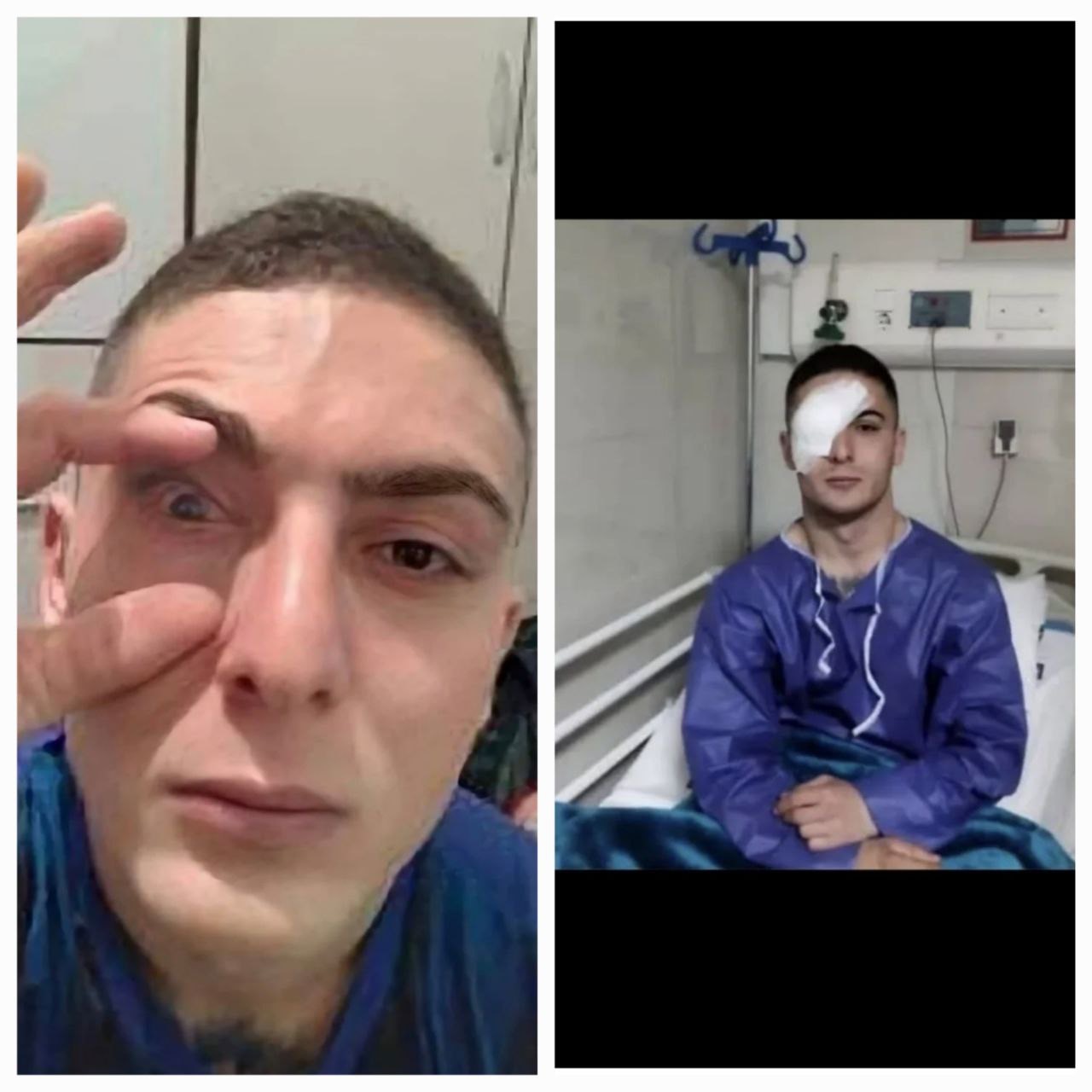
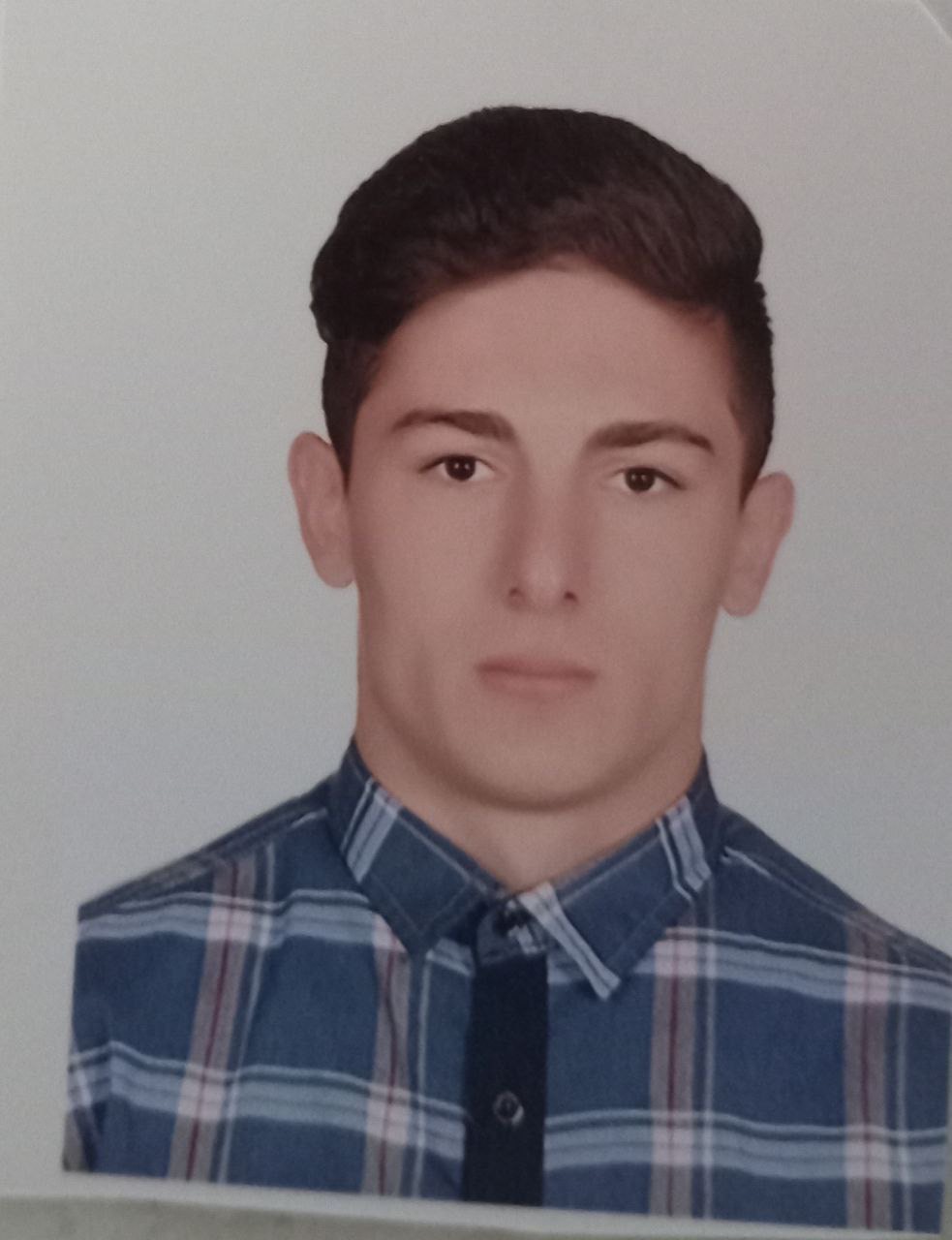
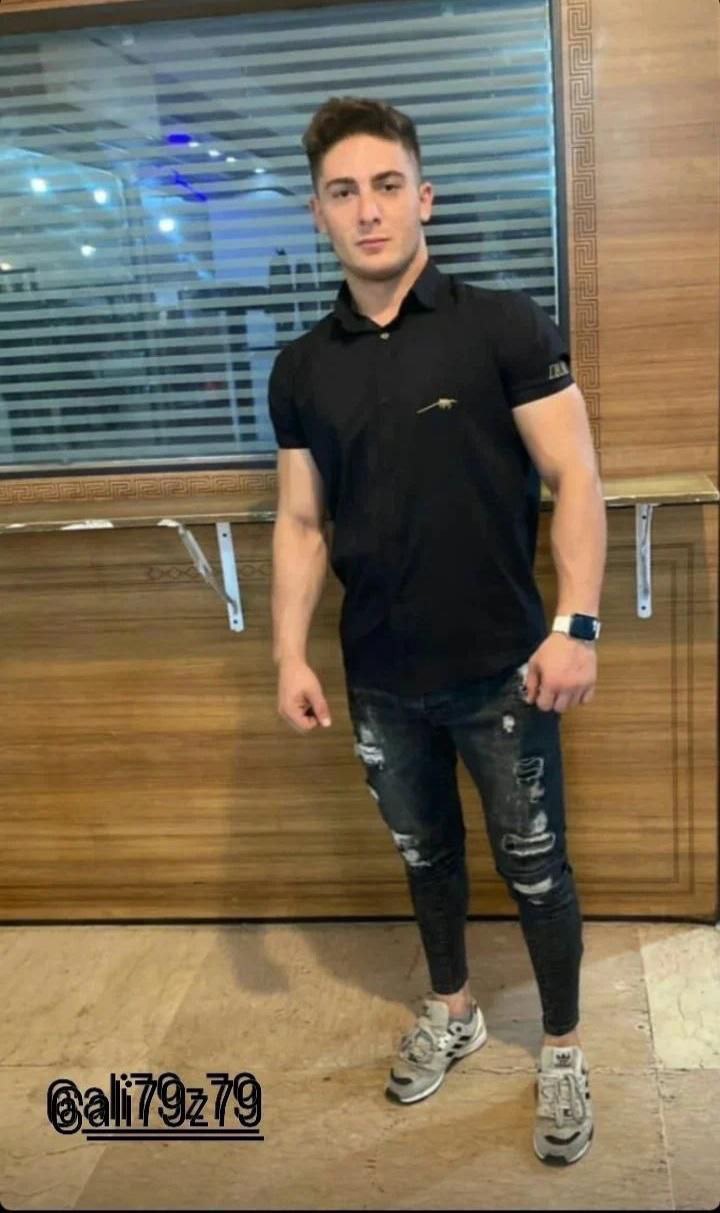
Ali Zarei, 22, was a car parts salesman. He had decided not to pursue tertiary education and like most his age, spent his days working and going to the gym.
“I had a normal life — not rich, not poor.”
He hadn’t been deeply involved in politics before the 2022 protests. But when the movement in 2022 started and it spread across the country following the killing of Mahsa Jina Amini, something shifted in him.
“At first I was just following the news. But little by little, the protests came to my neighborhood, and I joined in. I couldn’t stay home anymore.”
On October 7, 2022, Ali decided to join a protest in Tehran.
“It wasn’t even that chaotic. People were chanting. No one was throwing anything. Then the police started firing.”
Ali was shot at twice that day. The first time, the projectile grazed his eyebrow and narrowly missed his eye. Strangers took him into their home to clean him up.
Ali had thought about going home, but decided that this would be too risky as he was concerned about being followed. On his phone he saw that people had gathered at the University of Tehran, rather than to go home, he decided to go back into the crowd.
“I felt like I couldn’t stop. The fear had already left me.”
It was around 9PM when he got there and saw a crowd of maybe 2,000 people. Ali recalls there being many people there peacefully chanting, and small number of police who were not attacking. As the people continued to protest, the number of police started to grow and the police began shooting into the crowd with paintball guns.
A man near the front of the crowd was grabbed by officers. As others moved forward to pull him back to safety, the police opened fire. Ali ducked behind a trash bin.
“I heard the bullets hitting the trash bin. Then I looked up to check if they had left — and that’s when the painball hit my eye.”
He recalls collapsing. A man nearby tried to comfort him, telling him the injury may not be serious.
“When I took my hand off of my eye, something came oozing out. I thought it was my eyeball, but it turned out to be a blood clot.”
His vision faded quickly.
“That night, I still had a tiny bit of light perception. But within days, it was gone.”
He didn’t tell his parents right away. When he got home, he cleaned himself up and didn’t say anything. He didn’t want for his family to get scared.
“When my mom saw me in the morning, she begged me to go to the hospital.”
They went to Farabi Eye Hospital in Tehran, but outside, security vans were parked, and police were taking down the names of anyone with protest-related injuries. For fear of being captured, Ali and his mother made the difficult decision to not enter the hospital. For ten days, Ali lived with excruciating pain.
“All I could get was a numbing injection under my eye. No one could treat me properly.”
By the time he was finally admitted and operated on, it was too late. Any window to have saved his vision had closed and there was no longer anything doctors could do. He underwent multiple surgeries, including lens replacements and silicone oil injections, but nothing restored his sight.
“The retina was too damaged. Even my doctor said, ‘Not even treatment abroad would help — at least not for now.’”
Meanwhile, Ali kept returning to the protests — even with a bandage over his injured eye.
“People started recognizing me. They’d say, ‘It’s Ali — the guy with the eye patch.’”
In time, he connected with other survivors. On 2 February 2023, Mohammad Farzi gathered a group of survivors with eye injuries at a small theatre. This space was chosen both to support Kosar Eftekhari, a young aspiring theatre actress who’s eye had been injured after being fired at with a paintball gun, and to show solidarity between those who were still defiantly standing strong against a ruthless regime.
“Afterward we took a group photo — just a keepsake. I posted it online with a caption about my eye.”

The picture that Ali had posted had gone viral and would become iconic, as it represented the strength and resilience of the people in Iran and was a defiant message to say that despite the severe injury they had suffered, they were still standing, united and stronger than ever.
Threats and harrassment from the regime eventually lead to the removal of the post and deletion of Ali’s Instagram account, however, the group did not back down. They continued to meet, visiting other injured protesters, going to the graves of those who had been killed and supporting families who had suffered at the violence of the regime.
Ali, for his part in these activities, was heavily targeted, and on 23 December 2023, while visiting the graves of murdered protesters in Behesht-e Zahra cemetery, Ali was ambushed, blindfolded, loaded into a van, and taken to Evin Prison, where he was held in solitary confinement for 33 days.
“I was allowed just 30 seconds to call my family. I told them, ‘They’ve taken me. I’m in prison.’ Then the line cut.”
He wasn’t allowed a lawyer.
“They interrogated me constantly. One officer said to me, ‘We shot you in the eye, and we’re glad we did. You deserved it.’”
After more than a month, he was released on bail — five billion Toman (equivalent of $100,000USD). He was later sentenced to lashes, a fine, and a suspended prison sentence.
“It wasn’t enough for them that they had taken my eye, imprisoned me and taken bail for my release.”
Ali says the days in confinement were the hardest. He says that he would try to sleep, but at 4AM speakers would blast the Adhan into the cells shocking them awake. But he says that in the yard it was different. The prisoners would be able to speak to each other, and he even tells us about seeing another protester who had suffered an eye injury during protests, Amir Velayati, who was also in the viral picture taken that night after the theatre.
“It was more relaxed in the yard, Amir and I reminisced over having seen each other at the cemetery and now there we were.”
Eventually, he was able to leave Iran with the help of others.
“It was winter. I didn’t have a passport or military exemption. I had to leave through the mountains. I crossed into Turkey on 17 February 2025. Now I’m trying to reach Germany.”
Since we spoke with Ali in April, he has safely reached Germany where he now resides.
Ali carries no regret.
“Some people told me I was stupid for going. They say, ‘What changed?’ But I know why I went. I went for Mahsa. For those who were killed without justice. For my country. When people see me now and say, ‘Bless your parents for raising someone like you,’ that’s enough for me.”
Ali was once an ordinary young man with a quiet routine. He is still that person. But now, his story carries the weight of a generation’s fight — and he continues to be focused on a better tomorrow.
“We don’t all have to think the same politically. Monarchist, republican — whatever. Our common enemy is the Islamic Republic. After it’s gone, then we can decide our future. But until then, we need unity.”
– Ali Zarei
 Eyes for Freedom | Cheshm Baraye Azadi | چشم برای آزادی