The eyes of a revolution and the stories behind them
Our Stories
We have asked for people to share with us their stories, the way that they would like for them to be told.
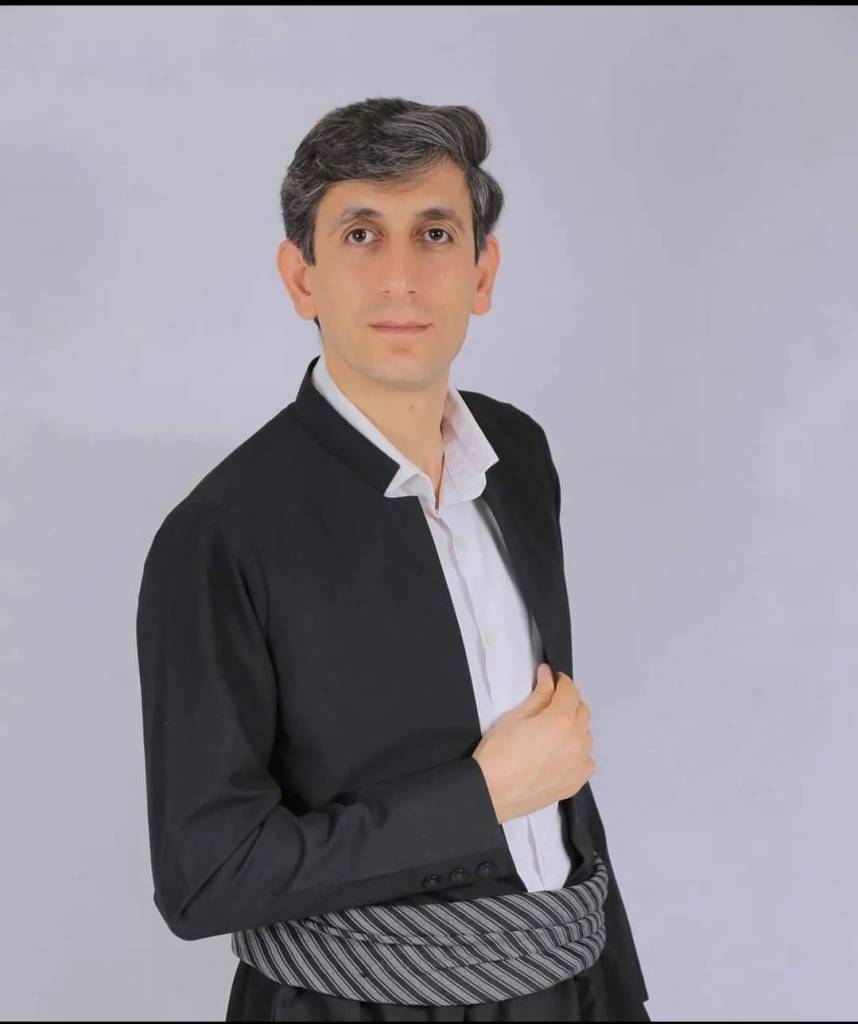
Afshin Amami
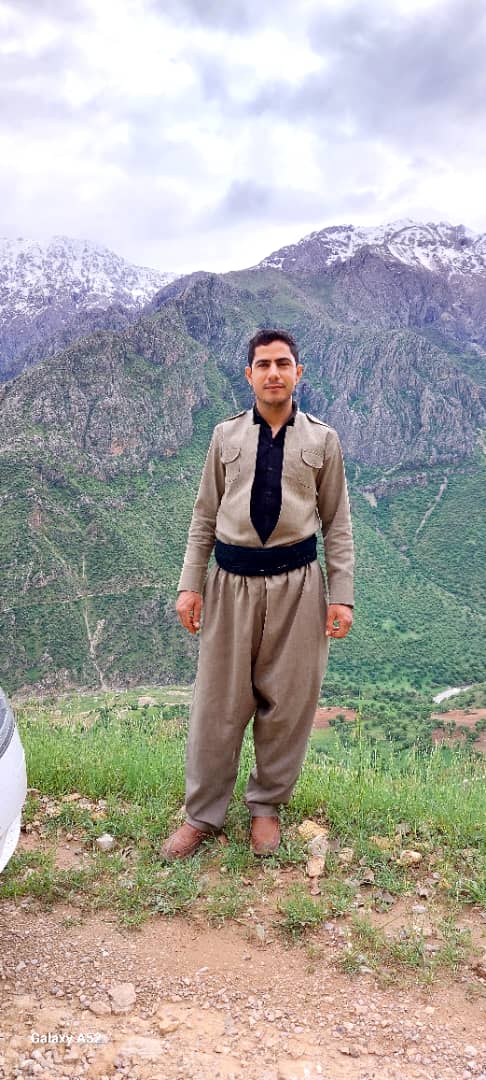
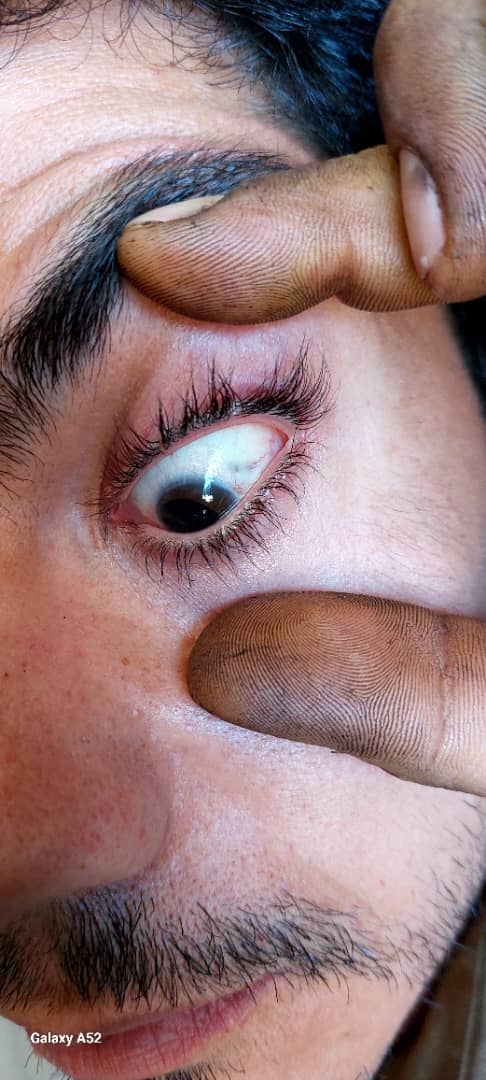


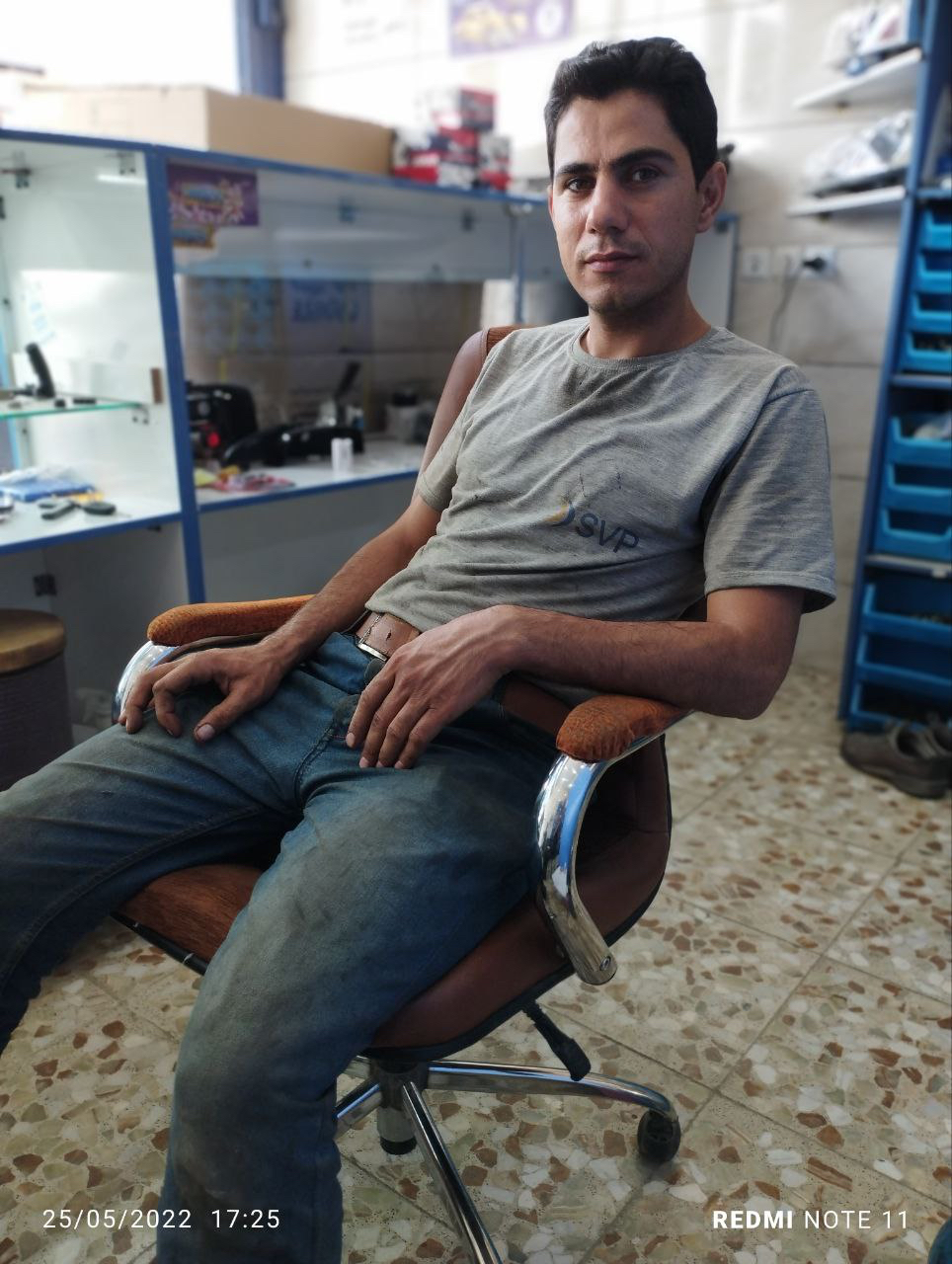
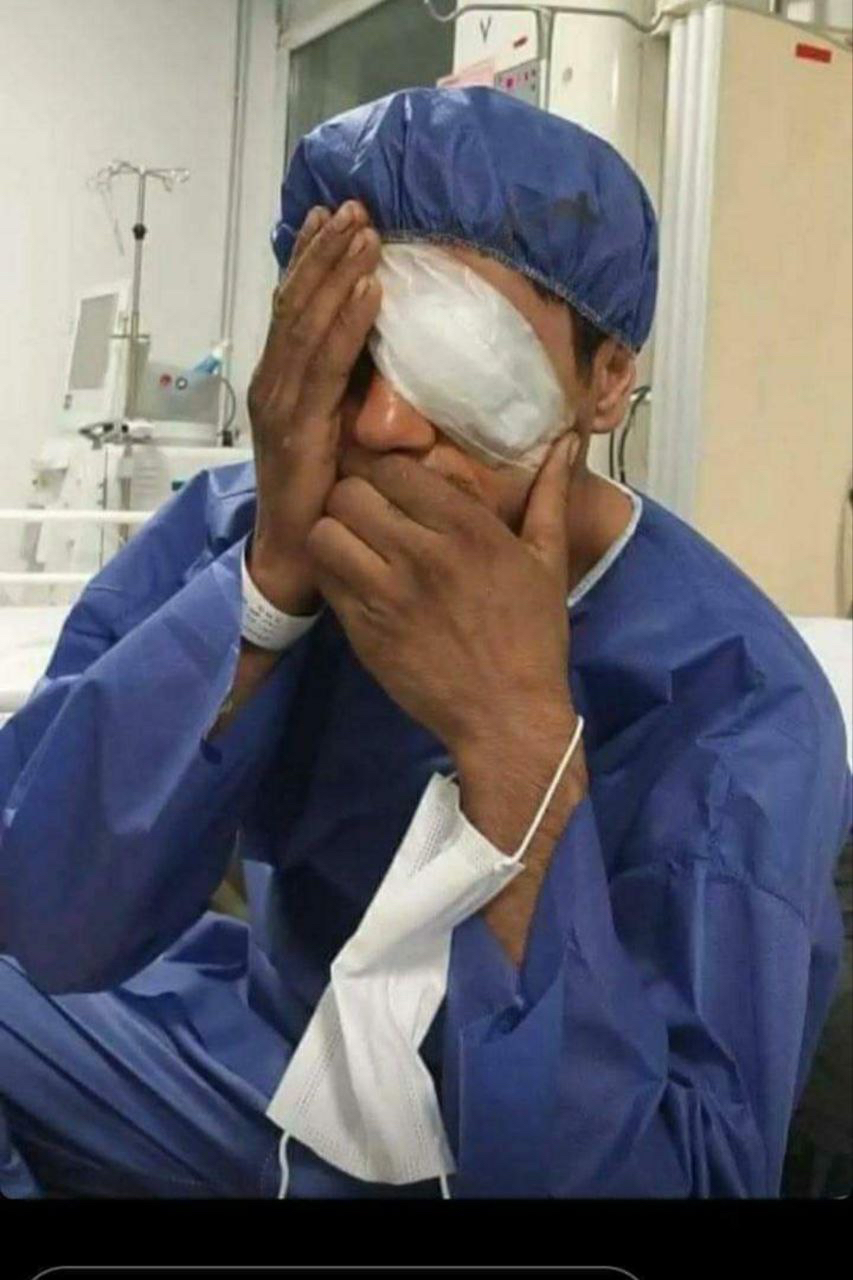
Afshin Amami
A 30 year old father and shopkeeper, had been working in manual labour jobs since the fifth grade.
“I started working as soon as I was able to. I wanted to be able to provide for myself.”
Afshin grew up in a very big family, with about 11 siblings. It was important for him to start working to help his father to provide for his family. He took immense pride in building a life standing on his own two feet.
Afshin was 22 years old when he lost his father, and a year after that, he married. He had a good home and a stable job.
“I was in better circumstances than many, I had my own house, car, job, wife, children… but I couldn’t tolerate what I was seeing.”
Afshin was working day and night, but his salary was barely enough to cover a week’s expenses. The dire economic situation, the hyperinflation, the pressures it was imposing on the people, plus the exploitation and theft from vulnerable people, the endless crimes committed by the Islamic Republic with impunity.
“They have no concern, no care for the people.”
These were some of the reasons why Afshin was unable to idly stand by and watch, despite his family not agreeing with him, Afshin joined the people in the streets.
In a small Kurdish city between Sanandaj and Kermanshah on 15 November 2022 at about 5 in the afternoon, Afshin and a few of his friends go out into the streets. The streets were filled with police and as Afshin and his friends drove around, they didn’t find anyone protesting. They decide to head back home eventually.
As they’re heading home, around 6:30 or 7PM, they saw a small group of 8 or 9 women at an intersection protesting. The women were marching and chanting, when they reached a corner where the police officers began to attack them.
“They started attacking the women, beating them mercilessly, firing tear gas at them and harassing them.”
Afshin and his friends decide to help the women. Afshin manages to grab one of the women by the arm and pull her towards the car to get her to safety. The woman at first was scared because she had thought that maybe Afshin was part of the police and she was being taken, however, after seeing the state of their car, she relaxed. She let them know that she has asthma and she was having trouble breathing.
Afshin had some paper work in his car that he immediately pulled out, rolled up and set on fire, using the smoke to help combat the impact of the tear gas that was impacting the woman’s breathing.
“I dropped her off somewhere safe and told her she’s done enough now. I told her that she’s done her part.”
By the time Afshin and his friends went back out into the streets, it was chaos.
“It was as if World War III had broken out.”
The streets had gotten bigger, and there were now maybe 2,000 young people in the streets of this small city, protesting for their rights.
The protests had grown and the police were becoming outnumbered, with protesters gaining control of a Basiji command centre. The violence and tension had grown and the unarmed protesters were only able to defend themselves with the use of rocks or anything else they could get their hands on.
Afshin finds himself suddenly slightly separated from the crowd and two officers approach him. They fire at him with a pellet gun, and that’s where a pellet enters his eye.
“I didn’t feel anything at first. I was focused on escaping.”
The second officer fires at him from close range hitting him in the knee with a rubber bullet, causing him to fall.
At this point, the people had advanced forward and were able to provide cover to Afshin to be able to get away to safety. Afshin wraps a scarf around the wound on his head. But he notices that he’s eyes is not bleeding.
“There was just a lot of water coming from eye. I asked people around me what was wrong with my eye but there was so much chaos that no one was paying attention. I covered one eye, and could see normal, but from the other one, I couldn’t see anything. There was just water pouring from it like a faucet.”
Afshin realises that he cannot continue in the streets and turns his focus to escaping, finding somewhere to hide where maybe he can find someone to get him to a hospital.
“I realised that I had lost my eye. Now I just needed to get to a hospital, or home, or anywhere safe.”
Afshin manages to find his way to a private hospital, where for fear of repercussions, he tells them that he is a jeweller and a small peice of metal had gone into his eye while he was working. The doctor that was exmining him did not seem to be buying the story. This frightened Afshin who was unsure if the hospital would report him to authorities.
The doctor however, despite the fact that Afshin would not say what had really happened, reassured Afshin that he would be safe in his care. The pellet had penetrated Afshin’s eye from the side and planted into his nose. He would need an operation to suture the holes left behind.
Afshin tells us that he later learned that some hospital staff were arrested for providing aid to protesters.
“I sacrificed my eyesight for the people of Iran. I have no regrets. If protests happen again, I will join and participate again. Because truly, I cannot tolerate this situation in Iran anymore.”
After the operation the doctor’s let Afshin know that the damage was too extensive and he likely will never see from his eye again. Afshin, unsatisfied with this outcome, sought the opinion of other doctors, but was left disappointed. Eventually, he went back to the first doctor who performed his initial operation who let him know that treatments would need to be ongoing to preserve the eye, but did not give him hope that he would be able to see again.
Two years on, Afshin still needs constant treatment for his eye as its pressure fluctuates. And even now, few people know that the cause of his injury was because of a pellet.
Afshin didn’t return home for 10 days after his injury. He did not want his family to know what had happened. He thought he would be able to recover quietly, regain his vision, and continue to live his life normally.
This caused a big issue for Afshin and his family life. While he had the support and help of his mother, his wife strongly opposed is participation in protests. But Afshin had witnessed the deaths of two of his close friends, Favad Mohammadi had been killed, and at his funeral, another of Afshin’s friends was also martyred.
Because of all of this, Afshin was not able to give up his fight. The pressures took a huge mental and physical toll, but it was important for him to keep fighting. After all, he had seen how close the people had gotten to their goal.
“We had heard of other cities where the protesters had taken control. The problem was that at that time, on that day, Kermanshah was quiet. There weren’t as many protests there, this meant that there were reserves for them to send more officers to our city. If it wasn’t for that… who knows what might have happened.”
The hope of having seen the power of the people gave Afshin the strength to stand his ground. Even if it meant the loss of his wife.
We asked Afshin if he ever felt fear.
“God is my witness, I went in at peace with the possibility that I could be martyred. I was at peace with it because I was seeing all the young people in our city rise bravely. It didn’t matter if you were Kurdish, Turkish or Persian. We were all fighting for the same thing. I had no fear and I have no regrets. I truly believe in what I stood for.”
Afshin tells us that he not only didn’t feel fear, but he felt pride. He believes wholly that his intentions were right and he stood on principle. He lost his eye for a cause.
Given that he was from such a small town, Afshin was targeted by police investigations. The only recompensation he was offered was for cooperating with officers to endanger others. Afshin was unwilling to comply.
For two years, Afshin has struggled with coming to terms with what has happened. He has been dealing with depression caused by all the pressures that had come after the protests had being quashed so violently.
One moment, they had been celebrating that the end of the brutality would be in sight, and Iran would be free, and the next, they were counting the bodies.
“We were celebrating, we were chanting that it’s over, that we’ve reached our dreams! Unfortunately, it didn’t happen. We didn’t get what we all wanted.”
Eventually what helped Afshin to start to overcome his depression was meeting others life him. Other’s like Parsa Ghobadi, who had been 18 years old when he had suffered an injury to both of his eyes at the protests. Afshin was able to contact others like him and this helped him to come to terms with what had happened.
Despite pressure to reopen his shop and continue on as if nothing had ever happened, Afshin was unable to just move on. His spirit was crushed. So he trusted his shop to a friend’s son to maintian appearances of normalcy, but he was unable to get back to work.
“I’ve always said it, always: I’m no better than anyone else. We are all equal, we’re all human beings. I have nothing to do with Islam or religion—we’re all just human beings. I’ve always believed that everyone should have a normal life and not endure the hardships of this system in Iran. That’s all I’ve ever wanted.”
Afshin wants to see an end to the poverty faced by millions in Iran.
“We are all the same; we should all be equal and live in comfort.”
Afshin says of others like him that were injured:
“They are real heroes, whether they’re women, men, or young boys. Hats off to them for standing strong, for refusing to accept oppression, for refusing to bow down. I truly love them and admire them deeply.”
Afshin continues to stand firm by his beliefs and continues to fight in any way he can to be able to reach the dreams of so many who were lost along the way. He wants for all those who have been forced to leave their land to one day be able to come back. He wants to see people live with hope, peace and good health.
“Despite everything I’ve endured, I’ve never regretted it. Not once. And I never will.”
“I hope that no one will ever accept such oppression again, and that this will never happen to the future generations, to our children’s children.”
– Afshin Amami
More about Favad Mohammadi:
Favad Mohammadi – Kurdipedia (Farsi)
Favad Mohammadi has been killed by guards – Radio Zamaneh (Farsi)
 Eyes for Freedom | Cheshm Baraye Azadi | چشم برای آزادی